
Ritchie County Criminal Court Cases
Ritchie County criminal court cases divide by charge level and stage. Magistrate Court hears misdemeanors, handles sworn complaints, sets bail, records warrants, and conducts the first steps in felony matters. Circuit Court, part of the Third Judicial Circuit, hears felony prosecutions after indictment as well as certain misdemeanors and appeals. Pennsboro and Ellenboro municipal courts keep a separate layer for ordinance violations and city citations. A city case may never appear as a county felony docket.
The current West Virginia Judiciary directory for Ritchie County places the Circuit Clerk in Suite 203 and the Magistrate Clerk in Suite 102 at 109 North Street in Harrisville. The Circuit Clerk keeps filed pleadings and orders in Circuit Court. The Magistrate Clerk holds the complaint, bail, warrant, misdemeanor, and preliminary felony file. Start with the court that handled the event, not with a broad request for a criminal history.
Ritchie Felonies in Third Circuit
Ritchie County shares the Third Judicial Circuit with Doddridge, Pleasants, and Wirt counties. Judges serve across that circuit, yet the Ritchie County case file remains with the clerk in the filing county. This regional structure can cause confusion when a judge's principal office is elsewhere. The county and case number on the docket identify the custodian more reliably than the judge's office location.
The felony path also explains why two Ritchie County court searches may be needed. A sworn complaint and preliminary events can appear in Magistrate Record Search before an indictment creates or advances the Circuit Court prosecution. An arrest charge may then differ from the indictment. Treat each as a stage, and read the signed final order before describing the outcome.
The official Magistrate Record Search entry page shows the public search gateway.
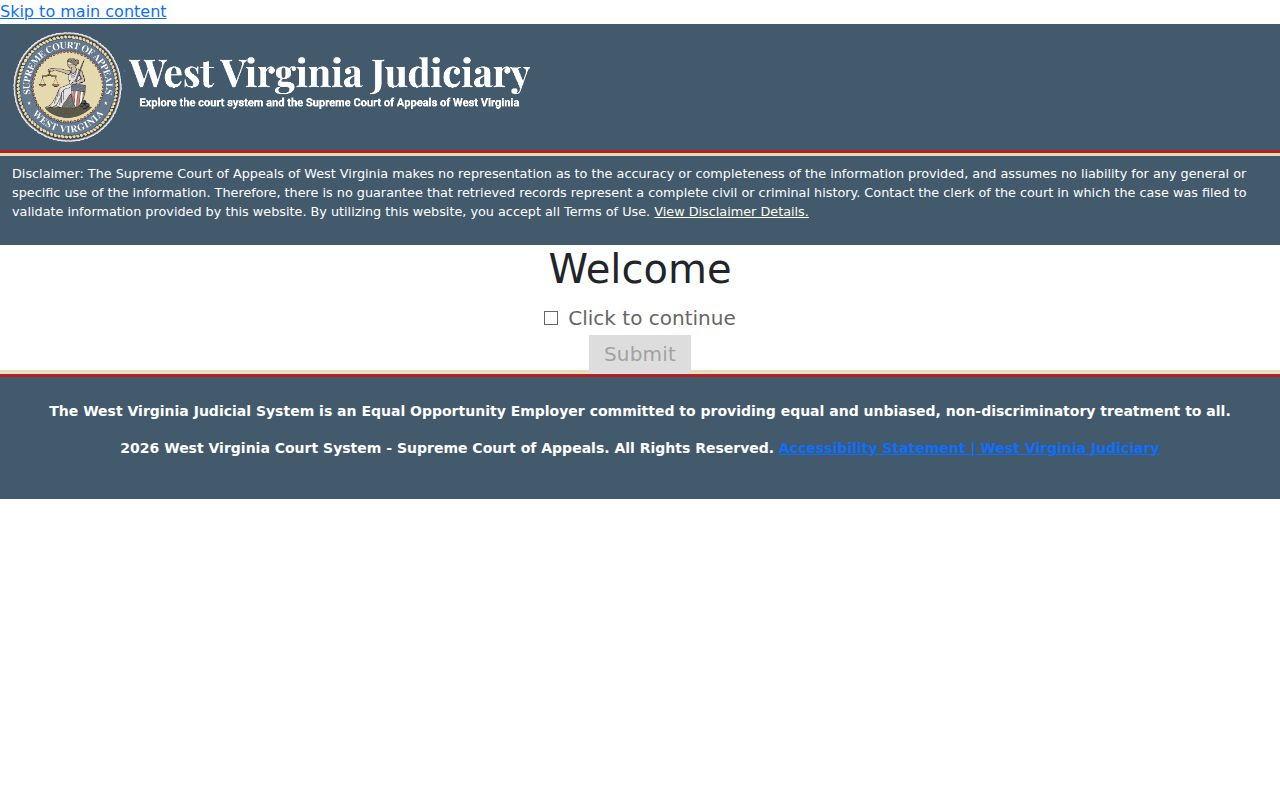
That interface covers the magistrate layer, not every document or the complete Ritchie County criminal history.
Searching Ritchie County Case Records
Use the free MCR Search for misdemeanors, complaints, bail, warrants, and felony preliminary events. Use WVPASS for public Circuit Court records dating from 1999. A name can produce more than one person, while MCR returns no more than 30 records. A known case number is the safest key. Compare the birthdate, filing date, county, charge, and disposition before deciding that two entries concern the same case.
- Open MCR Search, accept its disclaimer and CAPTCHA, and select Ritchie County when the control is available.
- Enter a first or last name, or use the exact magistrate case number. Review the returned birthdate and filing date.
- Save the case number, charge, disposition, and document list. Call the Magistrate Clerk when an indexed item is not online.
- Register for WVPASS, narrow the search to Ritchie County Circuit Court, and compare any felony continuation with the magistrate file.
- Read the signed disposition or sentencing order. Ask the correct clerk for inspection, copies, or certification when the image is absent.
| Field Label | Type | Required | Notes |
|---|---|---|---|
| First Name | Text | One name or case number | May be used without a last name |
| Last Name | Text | One name or case number | Check birthdate before matching a person |
| Case Number | Text | Alternative | Best choice when the number is known |
| County | Filter | Not stated | Select Ritchie to narrow statewide results |
| CAPTCHA and Acceptance | Challenge | Yes | Disclaimer acceptance is required |
The search sequence identifies the case, but it is not a complete criminal history. Use the signed order and clerk copy to verify the outcome.
Ritchie MCR Search Limits
MCR Search is useful but deliberately limited. It is free, requires no account, and works on a computer or mobile device. Results can show a party name, birthdate, filing date, charge, disposition, and a list of documents held by the clerk. The document images themselves are not downloadable from MCR. Its 30-record ceiling can also cut off a broad or common-name search.
The Judiciary's official MCR Search instructions explain the public tool and clerk fallback.
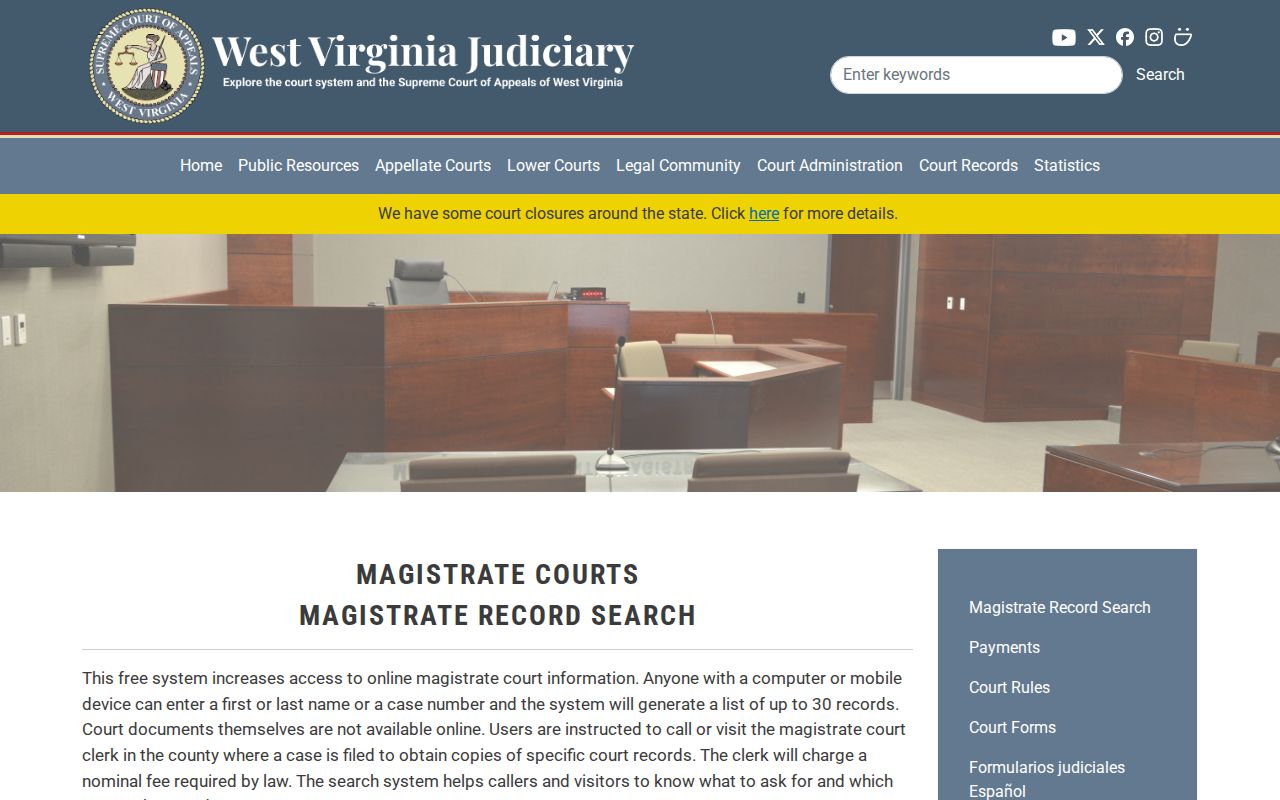
The Ritchie County Magistrate Clerk can confirm a listed filing and provide the available copy process when the online index stops short.
Note: A no-result MCR search does not prove that no Ritchie County criminal court case exists.
Inside a Ritchie County Case File
A Ritchie County criminal case file is a record of prosecution, not just arrest. The complaint or indictment states the charge being pursued. The docket lists filings and hearings in date order. Motions and hearing orders show what the parties asked and what the judge ruled. A plea, judgment, dismissal, acquittal, or transfer supplies the disposition. The sentencing order states the court's final terms when guilt is found.
| Case Number and Court | Identifies the filing court, county, and record needed from the clerk. |
|---|---|
| Charging Document | A complaint begins many magistrate matters; an indictment states grand-jury felony charges. |
| Docket Entries | Chronological labels for filings, hearings, motions, and orders. |
| Hearing Dates | Scheduled and completed court events, subject to later changes. |
| Disposition and Judgment | The recorded outcome, such as dismissal, acquittal, plea, or conviction. |
| Sentence and Conditions | Confinement, probation, restitution, costs, and other terms stated in the signed order. |
WVPASS may provide docket metadata and images for public Circuit Court documents. Sealed filings, protected identifiers, and confidential material remain out of view. MCR lists documents but does not furnish their images.
Ritchie WVPASS Files Since 1999
WVPASS brought statewide Circuit Court access online in March 2025. Registration and searching are free. Public documents date to 1999, and downloads cost $0.25 per page plus a card-processing charge. For Ritchie County felony research, narrow the search by county and criminal case type, then compare the caption, filing date, docket entries, and case status with any earlier magistrate case.
The Judiciary's public access hub for WVPASS is the official route into the system.
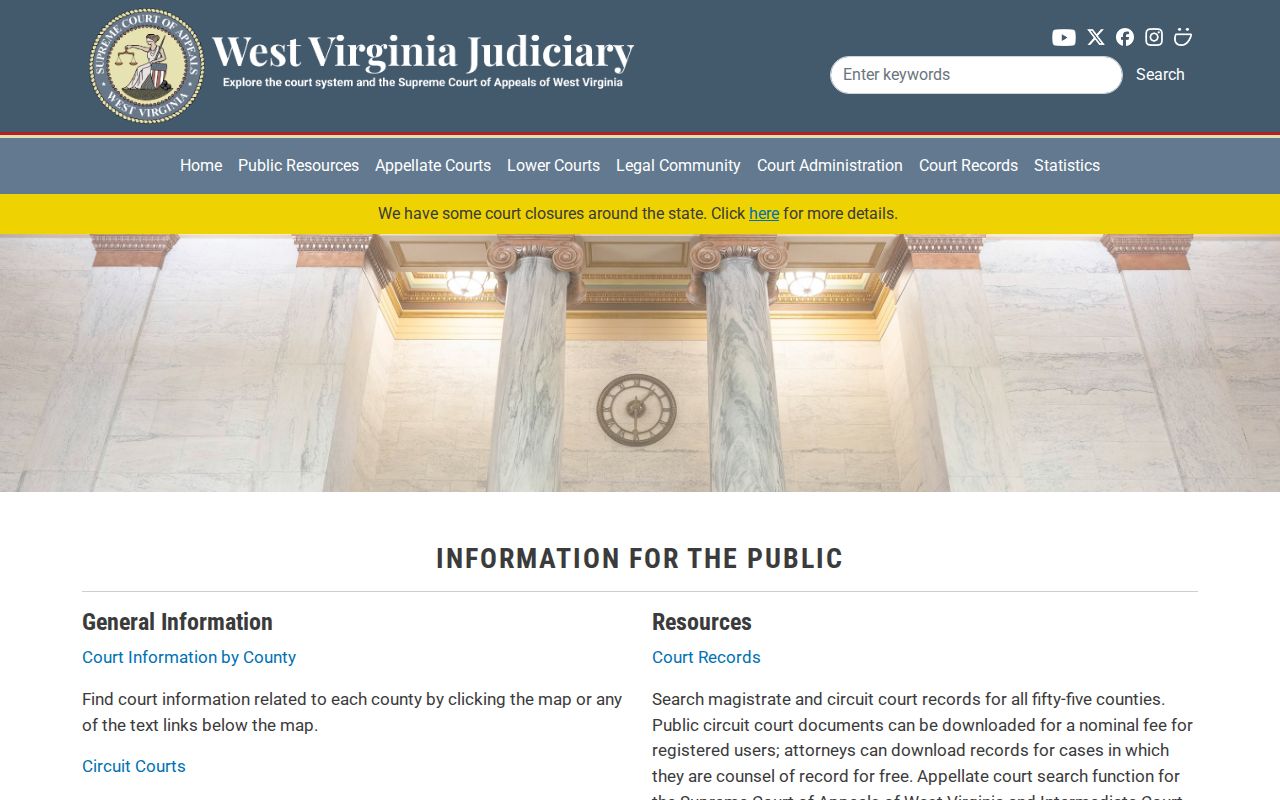
WVPASS is strongest for imaged Circuit Court material, while older or non-imaged records still require a focused request to the Ritchie Circuit Clerk.
How a Criminal Case Moves
An officer can file a sworn complaint after an arrest or seek a warrant before one. A magistrate conducts the initial appearance, states the charge and rights, and considers bail. A misdemeanor can remain in Magistrate Court through plea or trial. In a felony matter, the prosecutor may present evidence to a grand jury. A returned indictment moves the prosecution into Circuit Court for arraignment, discovery, motions, plea or trial, judgment, and sentence.
Case flow: Charges Filed › Arraignment › Pretrial › Plea or Trial › Disposition › Sentencing
The Ritchie County Prosecuting Attorney handles the charging side of both misdemeanor and felony cases and presents felony matters to the grand jury. The prosecutor is not the court-file custodian and does not provide defense advice. For the actual docket or signed order, use the Magistrate Clerk or Circuit Clerk.
Which Ritchie Clerk Has It?
Choose the Ritchie County clerk by the document, not merely by the person's name. The Magistrate Clerk at 109 North Street, Suite 102, Harrisville, WV 26362, handles misdemeanor dockets, complaints, bail records, warrants, and early felony papers. The office phone is 304-643-4409. The Circuit Clerk at the same street address in Suite 203 keeps indictments, Circuit Court motions, judgments, sentencing orders, and appeals. That office uses 304-643-2164, extension 1 or 128.
The official Ritchie County Circuit Clerk page describes the clerk's recordkeeping duties, though its older location details should be checked against the current Judiciary directory.
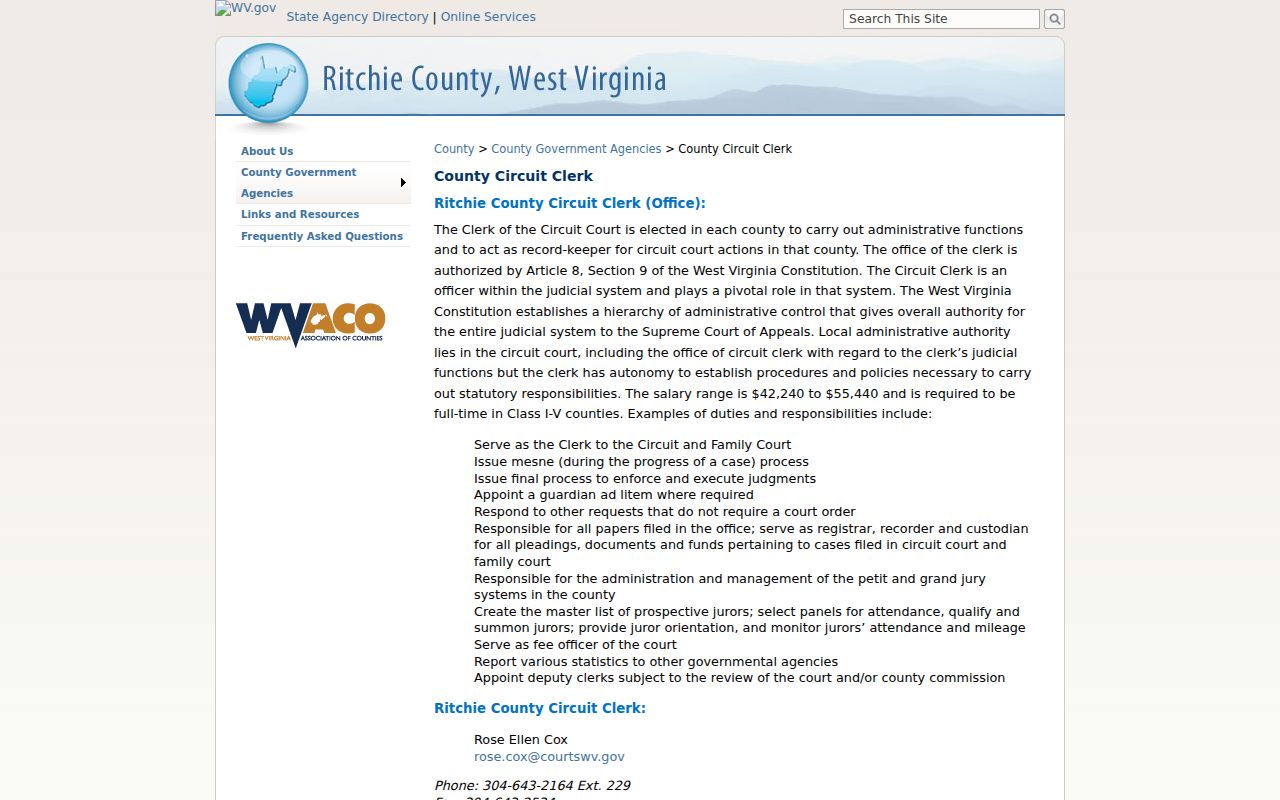
Call before traveling because official sources do not publish current public-counter hours, and archived files may require advance retrieval.
Read Ritchie Case Dispositions
The disposition answers what the court did. It matters more than the arrest label or first complaint. A dismissal ends a charge without a guilty finding, but it does not by itself erase every arrest or booking record. An acquittal is a not-guilty result after trial. A conviction is a judgment of guilt after plea or trial. Nolle prosequi means the prosecutor formally chose not to proceed with that charge at that time. A no-bill means the grand jury did not indict.
- Disposition
- The recorded result or current status of the case.
- Docket
- The date-ordered register of filings, hearings, and orders.
- Indictment
- The grand jury's formal felony accusation.
- Arraignment
- The hearing where the charge is stated and a plea is entered.
When the portal status and a document seem to conflict, rely on the latest signed order and ask the Ritchie County clerk to confirm it. Do not repeat an allegation as a conviction merely because it remains visible in an older docket entry.
Case Record Access & Restrictions
West Virginia Code §51-4-2 supports inspection and copying of court records unless a law, court rule, or order restricts access. Public files are retrieved by clerk staff, and inspection may be supervised in a set area. A focused request with the court, case number, filing year, and exact document is easier to process than a demand for every paper tied to a name.
Juvenile matters, sealed or expunged cases, victim-identifying data, personal identifiers, and records protected by a specific order are not ordinary public material. Online redaction does not mean the paper file is fully open. Conversely, an absent search result may reflect an older record, a name mismatch, a document that has not been imaged, or a lawful restriction.
For agency records outside the court file, West Virginia FOIA §29B-1-3 provides the request route for identifiable, nonexempt public records. Court access follows its own statute and clerk rules. A court outcome should come from the Ritchie County clerk, while an arrest narrative belongs with the arresting agency. Broader county record routes are outlined in the Ritchie County criminal history overview.